Online science tuition for a Class 6 student should not follow the same format as tuition for a Class 9 student. Yet many CBSE tuition programmes teach Science identically across Class 6 to 9, before switching gears sharply in Class 10. Class 10 preparation deserves its own dedicated focus. This guide looks specifically at Class 6 to 9, the foundation years. It covers what CBSE parents should expect from cbse science tuition online at each stage, before board pressure begins.
Key Takeaways
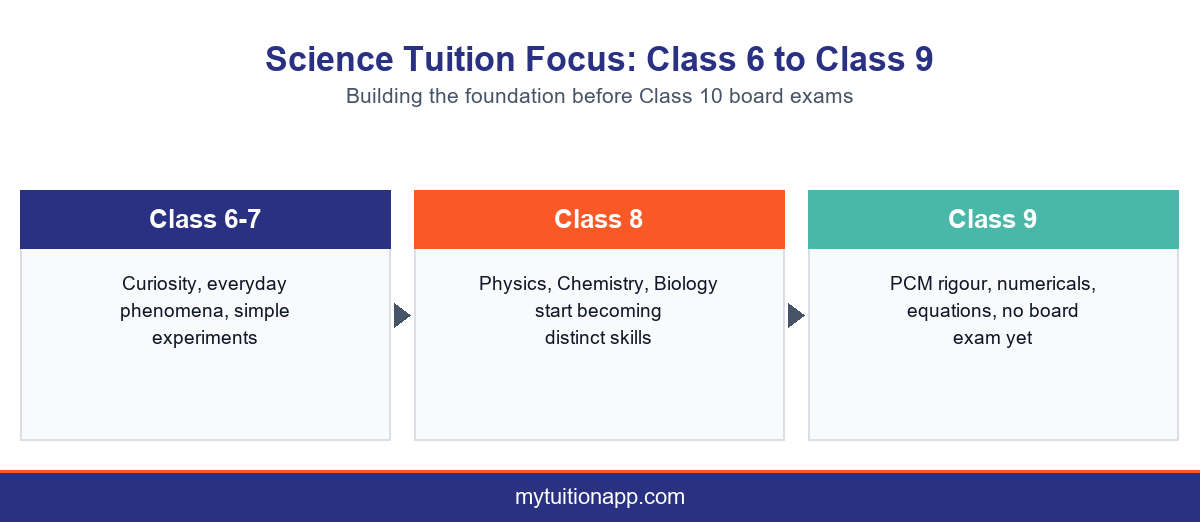
- Class 6 to 7 Science tuition should build curiosity and core concepts, not exam technique, since there is no board pressure yet.
- Class 8 is when Physics, Chemistry and Biology start behaving like distinct subjects, and tuition should reflect that shift.
- Class 9 is the last full year to build a solid pcm tuition foundation before Class 10 board exam preparation begins.
Why Class 6 to 9 Science Needs a Different Approach Than Class 10
Class 10 online science tuition is built around board exam chapter weightage and timed written tests. Class 6 to 9 has no such external pressure. A good programme uses these years differently. It builds genuine curiosity, corrects foundational misunderstandings early, and gradually introduces the separate disciplines of Physics, Chemistry, and Biology as a student matures.
A common mistake in cbse science tuition online is applying Class 10 style exam drilling too early, in Class 6 or 7. This can make Science feel like a subject to fear, rather than explore. Equally common is the opposite mistake. Class 8 and 9 sometimes get treated too casually, without any structured testing. A student then reaches Class 10 without ever having written a timed answer. The right balance shifts gradually against the full CBSE Science syllabus. It stays more exploratory and concept led in Class 6 to 7. Then it grows more structured and subject specific in Class 8. By Class 9, it becomes progressively more rigorous, as Class 10 approaches.
Parents switching a child between providers, or from offline to online science tuition, often notice this gap first. A Class 7 child might suddenly get Class 10 style timed tests. A Class 9 child might get only casual revision videos, with no written practice at all. Neither extreme reflects what CBSE actually expects at that stage. A fast way to check this: ask a provider directly how their Class 6 approach differs from their Class 9 approach.
Class 6 to 7: Building Curiosity and Core Science Concepts
These years introduce basic scientific method, everyday phenomena, and simple experiments. Tuition here should prioritise understanding over memorisation.
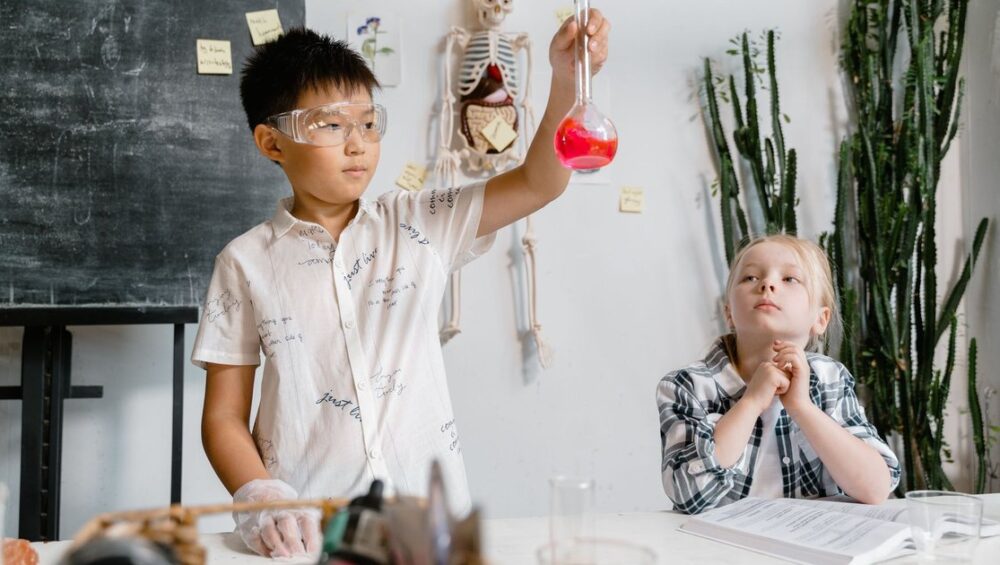
Best online science tuition for Class 6 and 7 uses everyday examples. Why does ice melt? How does a plant grow? Why does a shadow change shape? These build a habit of applying the scientific method, rather than memorising definitions.
Class 8: The Shift Toward Physics, Chemistry and Biology as Distinct Subjects
This is also the stage where a student’s relationship with Science as a subject tends to form. A programme that turns every topic into a memorise and recite exercise risks producing a student who dislikes Science. This can happen well before Class 8 introduces harder material. Simple, hands on style explanations tend to work far better here than dense textbook style delivery. This applies even over a video call, using props or diagrams a parent can find at home. It is a reasonable expectation to set with any online science tuition provider at this stage.
Class 8 is typically when Science starts splitting into recognisable Physics, Chemistry, and Biology topics. Tuition should start reflecting that structure.
Class 9: Preparing the PCM Foundation Before Board Pressure Begins
By Class 8, some chapters start to resemble the separate subjects a student will study formally from Class 9 onward. Examples include force and pressure, chemical effects of electric current, and cell structure. Physics tuition online cbse and chemistry tuition online cbse start to matter as distinct skills, even informally within a combined Science subject. Physics numericals and Chemistry equations require different problem solving habits than Biology’s descriptive answers. A good Class 8 programme starts introducing this distinction gently. It dedicates separate practice time to numerical problems versus descriptive or diagram based answers. This way, the transition into fully separate subjects in Class 9 does not feel abrupt.
Class 9 formally splits Science into Physics, Chemistry, and Biology. This is the last low pressure year to build a solid pcm tuition foundation before Class 10 boards.
Class 9 introduces chapters that Class 10 builds on directly and assumes as known. Examples include motion, atoms and molecules, and tissues. A pcm tuition cbse programme at Class 9 level should treat Physics and Chemistry with real rigour. This includes numerical practice and balanced chemical equations, even though there is no public board exam yet. Online physics tuition class 9 cbse and online chemistry tuition class 9 cbse should include regular structured tests, not just live explanation. Class 10 will expect a student to already be comfortable writing full numerical solutions and balanced equations under time pressure. Skipping this rigour in Class 9 is a mistake. Treating it as a breather year, between Class 8 and the Class 10 board exam, is a common reason students struggle. This struggle often shows up in the first term of Class 10 Science.
What to Look for in Online Science Tuition Before Class 10
A practical way to judge this is to ask for a sample Class 9 test paper before enrolling. Compare it to a Class 10 paper on a similar topic. If the Class 9 paper looks noticeably easier or less structured, the programme is likely under preparing students for the jump ahead. A well designed Class 9 pcm tuition course should feel like a gradual ramp toward Class 10 difficulty. It should not feel like a plateau followed by a sudden jump, once board exam pressure actually begins.
Whatever the class, ask specifically how a provider adjusts Science teaching by stage. Use a free demo class to confirm the answer.
When comparing providers for Class 6 to 9, ask directly how their Science teaching changes as a child moves up each year. Do not accept a single description that supposedly applies to all four classes equally. Ask specifically when Physics, Chemistry, and Biology start being treated as distinct skill sets. Ask whether Class 9 receives board exam level rigour, despite having no public exam. A chapter based model, such as 90+ My Tuition App’s Personalised Chapter Model, adjusts this naturally. Pacing and depth tie to the specific chapter and class a student is working through. This differs from a single fixed curriculum applied uniformly across four very different years.
It is also reasonable to ask how a provider handles a student who needs more time on one discipline than another. An example is a Class 9 student comfortable with Biology, but weak in Chemistry equations. A rigid batch schedule treats Physics, Chemistry, and Biology as a single combined pace. A chapter based structure works differently. It allows extra sessions on Chemistry specifically, without slowing down progress in the subjects the student already handles well.
Finally, ask how progress is reported across Class 6 to 9. These years rarely have a formal exam to signal whether a child is on track. Regular, specific feedback matters more here than at any later stage. It should name exact chapters or skills that need more work. This matters precisely because there is no board exam acting as an external check until Class 10 arrives.
Building the Right Foundation Before Class 10
Science tuition for Class 6 to 9 is not a single, uniform product, even though it is often marketed that way. Curiosity and concept building matter most in Class 6 and 7. The gradual introduction of Physics, Chemistry, and Biology as distinct disciplines matters most in Class 8. Genuine rigour to prepare for Class 10 board exams matters most in Class 9. When evaluating cbse science tuition online for your child, ask how the approach changes by class. Then book a free demo class to see that difference in practice, before committing to a full year.